
Insight · July 24, 2026
AI workflow integration done right: from useful automation to controlled operations
How teams can integrate AI into real workflows with discovery, guardrails, evaluation, and human review instead of isolated prompt experiments.
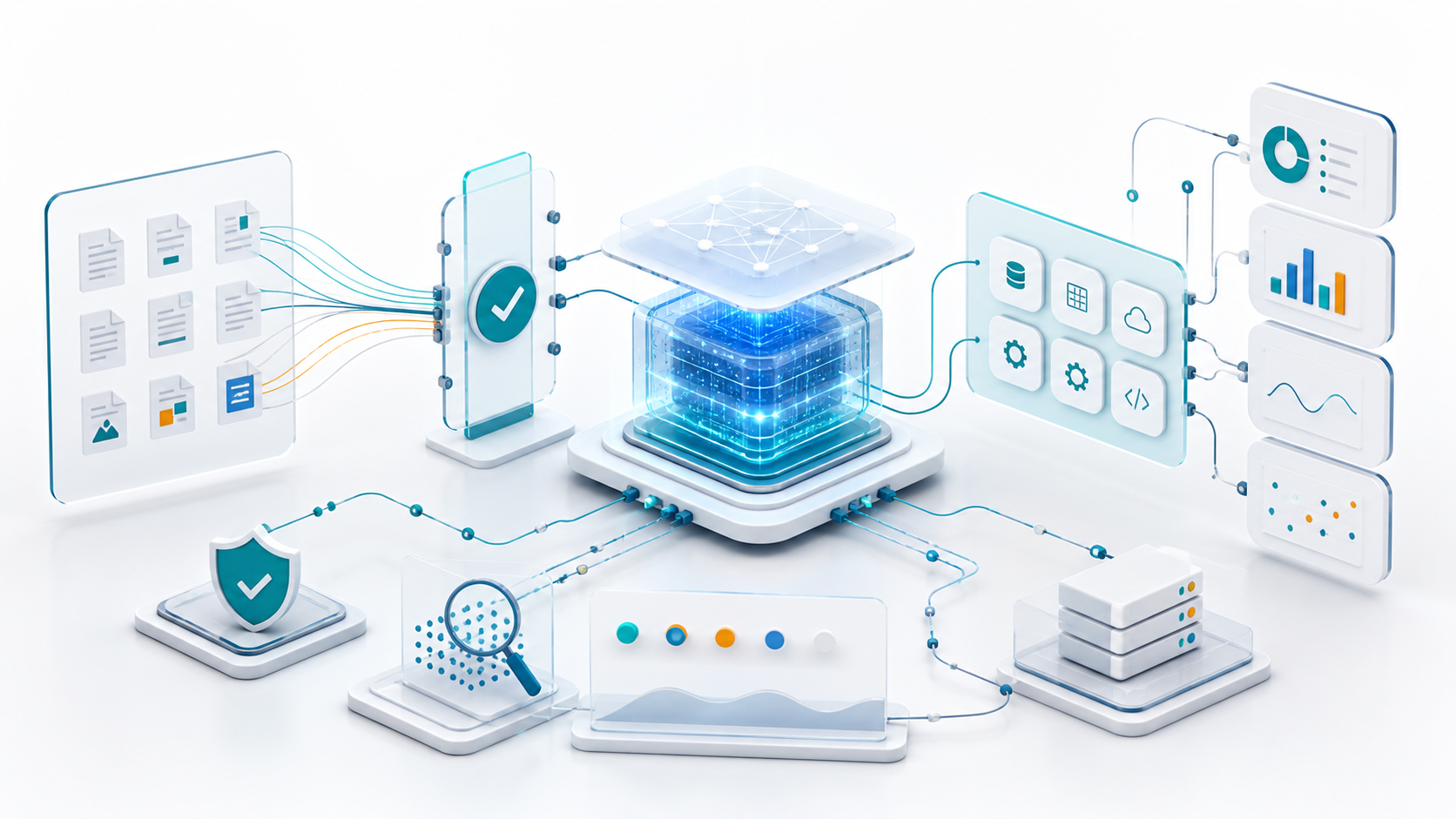
AI workflow integration is most valuable when it connects directly to a real operational bottleneck. A prompt alone is rarely a system. A useful integration has inputs, rules, approvals, outputs, logs, and a clear way to measure whether the work improved.
The first step is discovery. Before choosing a model or tool, map the workflow that currently consumes time: documents, emails, support requests, reporting, approvals, product data, internal search, or repetitive analysis. Then decide which parts can be automated, which parts need human review, and which parts should remain manual.
What production AI workflows need
A controlled AI workflow should usually include:
- Defined source data and permission boundaries.
- Prompt and tool versions that can be reviewed.
- Human approval for sensitive outputs.
- Evaluation examples for quality checks.
- Logging so errors can be traced and improved.
- Clear fallback paths when the model is uncertain.
This structure keeps AI from becoming a hidden black box. It also gives the business a practical way to compare time saved, quality improved, and risk introduced.
Where to start
Good first AI integrations are narrow and repetitive. They might summarize long documents, classify support requests, draft structured responses, extract fields from files, prepare SEO briefs, or generate internal reports from trusted data.
The safest path is to start with one workflow, measure it, and then expand. That approach creates durable automation instead of a collection of experiments that nobody owns after launch.